
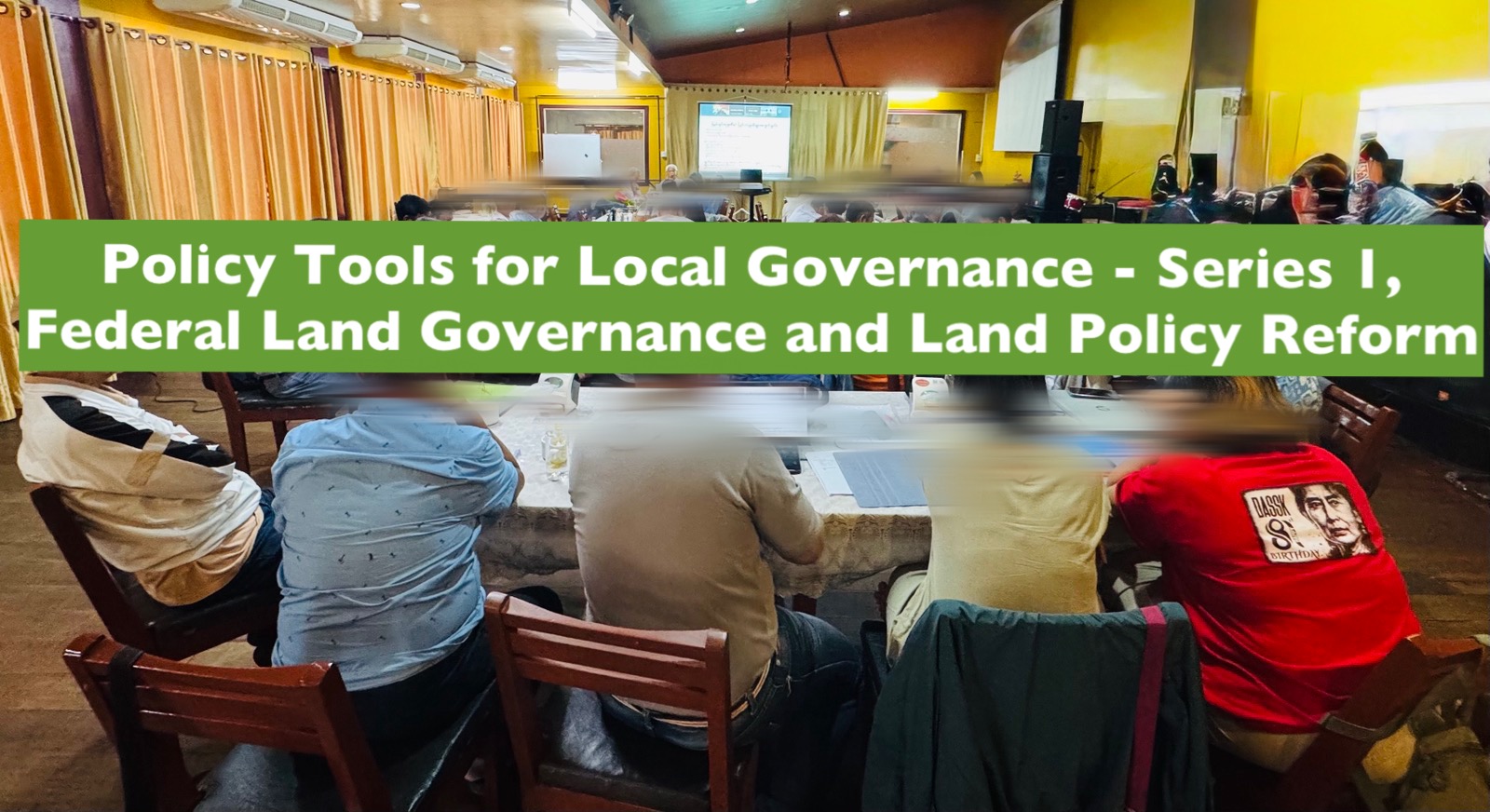
20 November 2026
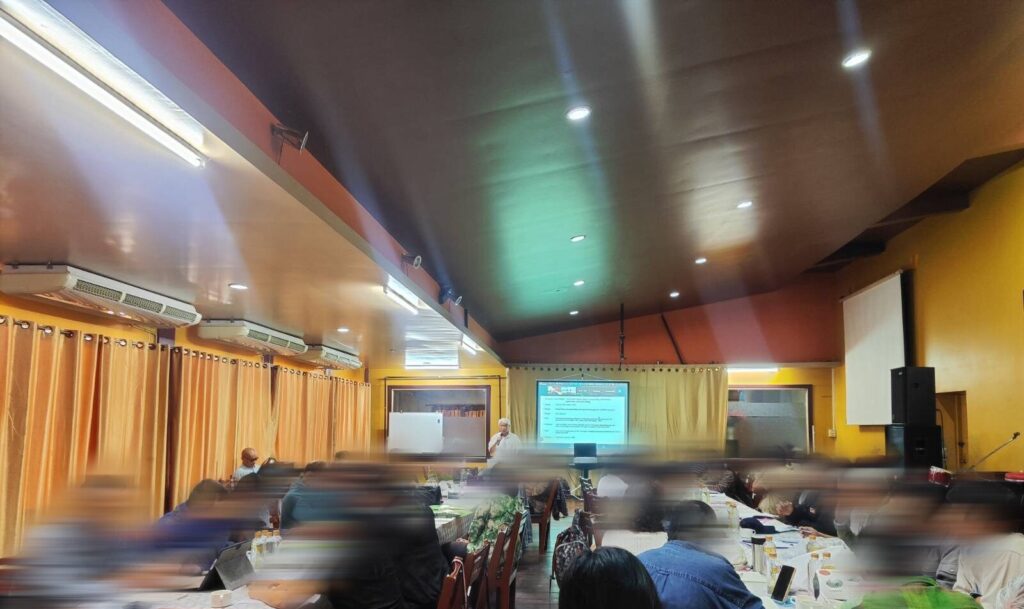
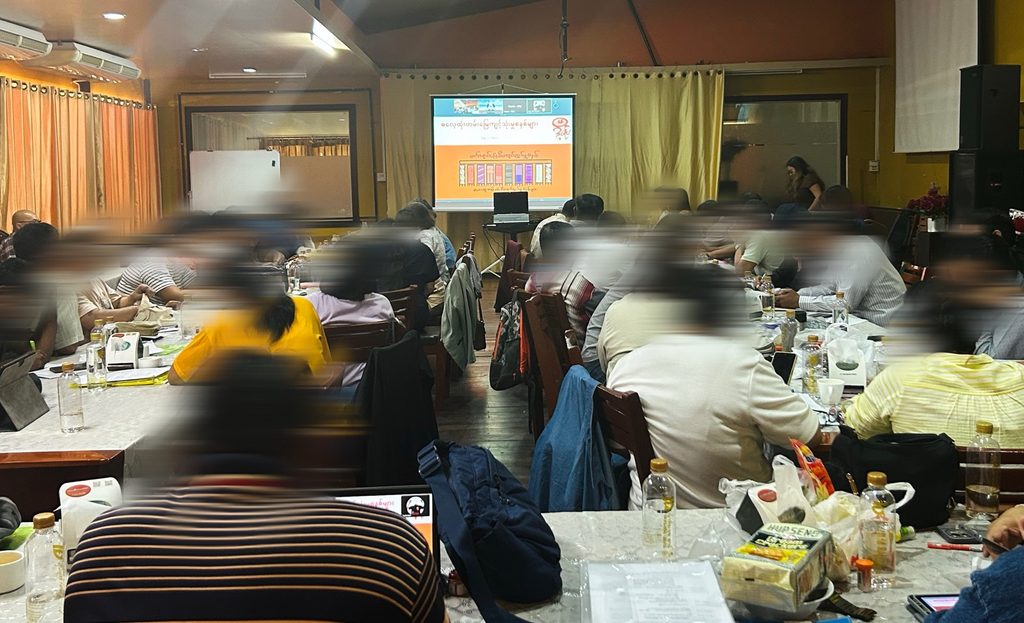
A five-day workshop held at the Thai-Burma border from 14 to 18 November 2026 brought together a structured programme of presentations, reviews, and discussions on federal land governance, land policy reform, and the protection of land rights in Myanmar. The workshop, titled “Federal Land Governance and Land Policy Reform,” formed part of the “Policy Tools for Local Governance Series – No.1” programme and was organized by the Institute for Peace and Social Justice (IPSJ).
A total of 94 elected Members of Parliament participated in the workshop, including 51 attending in person (29 men and 22 women) and 43 joining through a virtual platform (26 men and 17 women). Participants represented constituencies across Myanmar, including Ayeyarwady, Bago, Magway, Mandalay, Sagaing, Tanintharyi and Yangon Federal Units, and Chin, Kachin, Karen, Karenni (Kayah), Mon, Shan and Rakhine States.
The workshop addressed how land rights might be protected under a future federal governance framework, including the division of authority among federal, state or federal-unit, and local institutions. It also examined the 2016 National Land Use Policy, existing land laws, customary tenure, access to land for landless households and displaced communities, and the relationship between agricultural investment and smallholder farmers’ interests.

Five days of policy dialogue
The first two days focused on the National Land Use Policy (2016), including its strengths, weaknesses and potential directions for future action. Sessions explored the distribution of land-governance powers across three levels of government, federal guarantees of basic land rights, technical support for land information systems, and mechanisms for resolving land disputes across states or federal units.
On the third day, presentations considered policy frameworks for land administration and management within states and federal units, alongside historical changes in Myanmar’s land governance and the legal framework for land rights. The agenda also covered farmland legislation and laws protecting and promoting farmers’ rights and interests.
The fourth day examined land allocation, agricultural development support and potential resettlement programmes for landless people, internally displaced persons and refugees. Further sessions addressed customary land tenure and responsible land governance, including the Voluntary Guidelines on the Responsible Governance of Tenure of Land, Fisheries and Forests (VGGT).
The final day considered agricultural economic policy that accommodates private-sector investment while safeguarding smallholder farmers, contemporary land-related challenges, and approaches to remedy. The programme concluded with a wrap-up and brainstorming session on possible ways forward.
Key policy questions
Across the programme, several linked policy questions framed the discussions: how federal and subnational responsibilities should be defined; how customary and community land rights should be recognized; how displaced and landless people could gain secure and equitable access to land; how women’s land rights on land use, joint land registration, inheritance and transfer can be guaranteed; how accountable land administration and dispute-resolution arrangements could be designed. These are areas of policy consideration reflected in the programme.
Toward inclusive and accountable land governance
The workshop agenda points to the importance of treating land reform as more than a technical matter of registration or land allocation. A coherent approach would need to connect tenure security, access to justice, local participation, agricultural livelihoods and safeguards against dispossession. Particular attention is warranted for communities whose land claims may rest on customary practices, and for households affected by displacement or conflict.
The programme’s treatment of federal arrangements highlights the need to clarify institutional roles while maintaining minimum rights protections across jurisdictions. Similarly, its focus on land information systems and inter-unit disputes illustrates the practical governance challenges that can arise when land administration is decentralized.
The sessions on land redistribution, resettlement and agricultural investment also underscore important implementation choices. Any future programmes would require transparent eligibility criteria, voluntary participation where resettlement is contemplated, meaningful consultation, accessible grievance procedures and measures to protect the livelihoods of smallholders and other vulnerable land users.
According to the workshop agenda, Dr. Thaung Htun, U Thit Lwin and Mg Sitt Nyein presented and facilitated sessions, with contributions from participants and the IPSJ team. Dr. Thaung Htun’s sessions focused on federal land governance, rights protection, land administration, land allocation and agricultural economic policy. U Thit Lwin led reviews of the National Land Use Policy. Mr. Sitt Nyein addressed Myanmar’s land laws, historical land governance, customary tenure and Customary Land Rights.
Next steps
The scheduled final session, “Wrap-up and Brainstorming for the Way Forward,” provided space for participants and facilitators to consider future directions.
The workshop’s programme offers a substantive basis for continued dialogue on a rights-based, inclusive and workable federal land governance system for Myanmar—one that addresses historical grievances, respects customary tenure and links land policy to sustainable rural livelihoods.
Media contact: Dr. Thaung Htun
Email: [email protected]