December 7, 2025
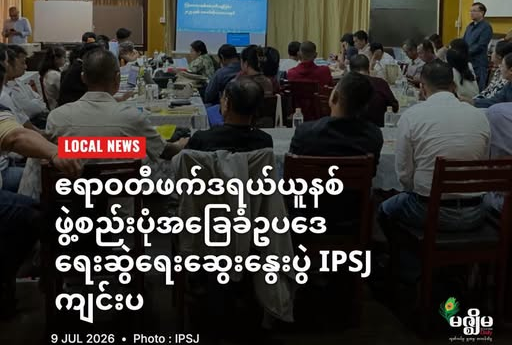
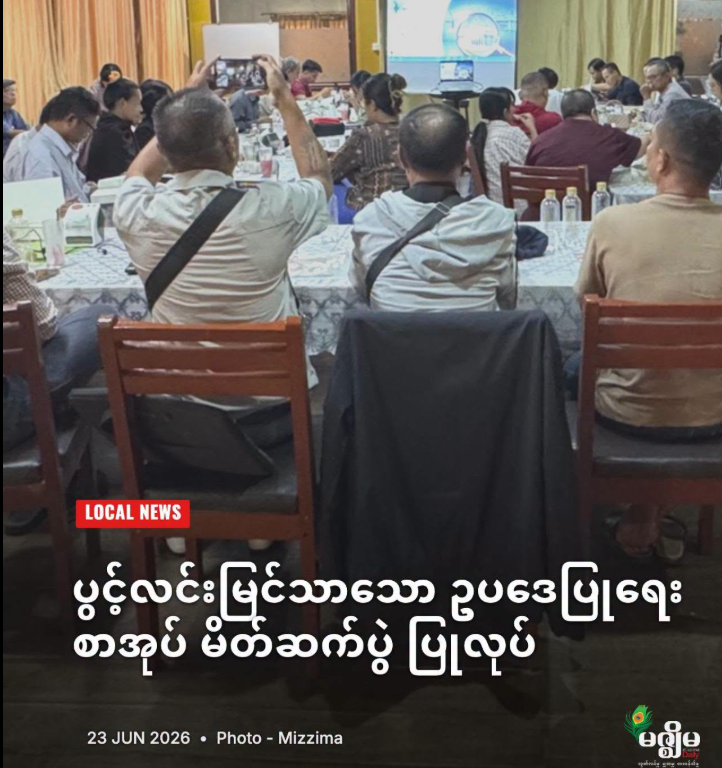
MAE SOT, THAILAND – The Institute for Peace and Social Justice (IPSJ), in collaboration with the Burma Lawyers Council (BLC) and the Ministry of Justice (MoJ) of the National Unity Government, successfully wrapped up a landmark workshop titled “Rule of Law, Independent Judiciary, and Judicial Sector Reform.” Held from December 4–6, 2025, the event brought together 75 legal experts, Members of Parliament, and civil society leaders to finalize a groundbreaking “Way Forward” blueprint for Myanmar’s legal future. The prominent resource persons included Dr. Ying, Dr. Daisy, and Dr. Su.
As Myanmar advances toward a federal democracy, the workshop highlighted the urgent need to dismantle systemic corruption and rebuild a judiciary capable of safeguarding fundamental human rights. H.E. U Thein Oo, Minister of Justice, opened the session by stressing that a truly independent judiciary is the essential foundation of the opposition movement’s vision for a federal state.
A Four-Phase Strategic Action Plan
The workshop concluded with a detailed four-phase plan to shift from emergency-resistance-led justice to a sustainable federal system.
- Standardization and Harmonization: Establish a high-level Legal Standards Commission to unify legal frameworks across resistance-controlled areas, ensuring non-negotiable standards for prosecuting international crimes.
- Personnel Integrity and Vetting: A rigorous professionalization initiative to vet and train CDM (Civil Disobedience Movement) law practitioners, ensuring the new judiciary is characterized by ethical conduct rather than political influence.
- Physical Delivery and Accessibility: Deploying Mobile Courts and digital filing systems to reach displaced persons and ethnic regions, ensuring justice is accessible in local languages.
- Security and Sustainability: Implementing witness protection programs and a “Justice Progress Index” to ensure transparent, public oversight of the reform process.
Transforming Theory into Action
The “Way Forward” strategy advances beyond academic debate, emphasizing the practical integration of CDM practitioners into judicial systems currently run by Ethnic Armed Organizations (EROs) and the NUG. By connecting local justice efforts with international human rights standards, IPSJ and its partners seek to end the culture of impunity that has long affected the region.
“This is a living blueprint owned by those on the frontlines of justice,” stated the workshop organizers. “We are not just planning for a future federal union; we are building the mechanisms for accountability and social justice today.”
Contact:
Legal and Human Rights Program Coordinator
Institute for Peace & Social Justice
Email: [email protected]
About IPSJ– The Institute for Peace and Social Justice (IPSJ) is a Burmese-led, rights-based institution dedicated to advancing federal democracy, inclusive governance, and climate resilience in Myanmar through research, dialogue, and institutional reform.